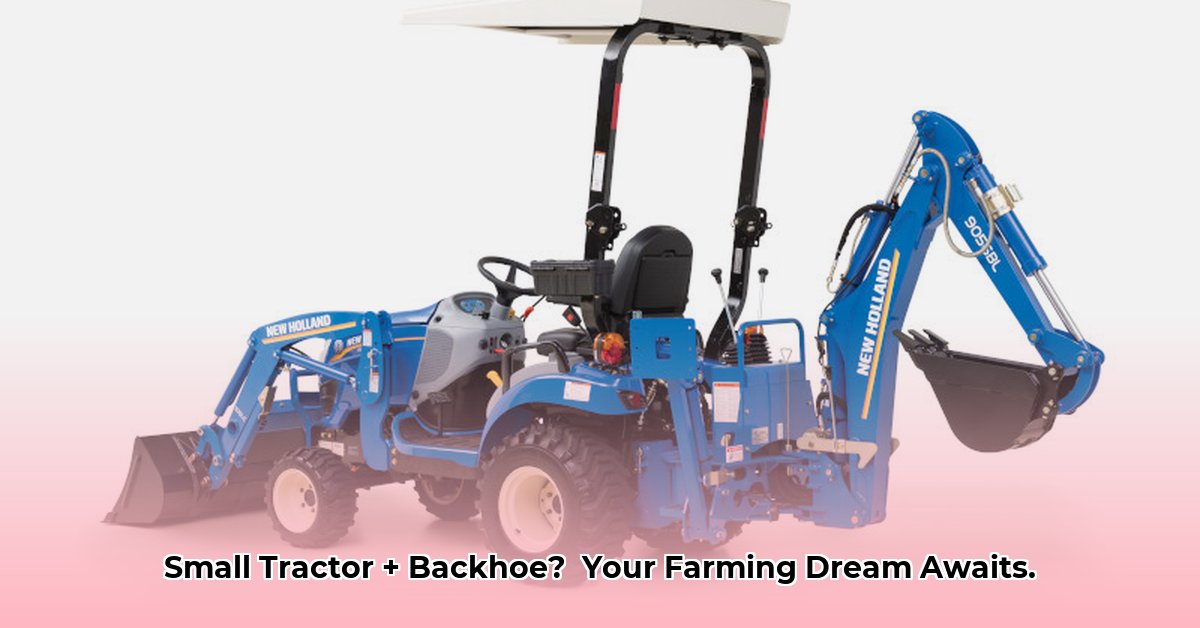
Finding the perfect compact tractor with a backhoe for your sustainable farming operation can feel overwhelming. This comprehensive guide simplifies the process, offering actionable advice and insightful reviews to help you choose the right machine for your needs and budget. We'll explore key features, compare models, and discuss sustainable farming practices to ensure your investment supports a thriving and environmentally conscious farm. For more tractor resources, check out this helpful website.
Defining Your Needs: The Foundation of Your Tractor Selection
Before you even browse tractor brochures, take the time to assess your farm's unique requirements. This personalized approach ensures you invest in the right tool for the job, maximizing efficiency and minimizing environmental impact. Consider these crucial factors:
1. Farm Size and Scale: Are you operating on a small plot under 5 acres, a mid-sized farm of 5-20 acres, or a larger operation exceeding 20 acres? The scale of your operation directly impacts the size and power of the tractor you need.
2. Soil Type and Terrain: Is your land predominantly sandy, heavy clay, or a well-balanced loam? Understanding your soil type informs the choice of attachments and the necessary horsepower for optimal performance. Rolling hills or flat terrain also impacts tractor selection.
3. Primary Farming Tasks: Create a detailed list of your regular tasks. This might include plowing, planting, harvesting, land clearing, irrigation system installation, or material hauling. Prioritize these tasks to determine essential tractor features and attachments.
4. Budget and Financing: Establish a realistic budget, factoring in the purchase price, potential financing options (loans or leases), operating costs (fuel, maintenance), and projected lifespan.
5. Long-Term Vision: Where do you see your farm in 5, 10, or 20 years? Are you planning to expand your acreage, diversify crops, or add livestock? Choose a tractor that can adapt and grow with your agricultural goals.
Key Features: Power, Efficiency, and Versatility for Sustainable Farming
Selecting a tractor involves balancing power with sustainability. While horsepower dictates capabilities, fuel efficiency is paramount for environmentally conscious farming.
1. Horsepower (HP): A higher HP rating translates to greater power and ability to handle multiple tasks. However, higher HP generally means increased fuel consumption. Aim for the minimum horsepower needed to effectively perform your primary farming tasks.
2. Fuel Efficiency: Precise fuel efficiency data for specific models can be elusive. However, focus on tractors with modern, fuel-efficient engine designs and technologies. Regular maintenance, including timely oil changes and air filter replacement, significantly boosts fuel economy and engine lifespan.
3. Backhoe Capabilities: The backhoe's digging depth, lift capacity, and reach are crucial for tasks ranging from installing fence posts to digging drainage ditches. Carefully assess your needs to select a backhoe with appropriate specifications.
4. Attachments: The versatility of your tractor is amplified by the range of compatible attachments. Consider plows, tillers, seeders, cultivators, and other implements that align with your farming practices. Prioritize attachments that promote sustainable farming methods like no-till cultivation.
5. Maintenance and Durability: Easy access to parts, a straightforward maintenance schedule, and a reputation for reliability are vital. Minimize downtime by selecting a tractor with readily available parts and user-friendly maintenance procedures.
Tractor Models: Recommendations Within Budget Brackets
Choosing the "best" tractor is highly subjective and depends on individual needs. However, we can offer some general recommendations based on budget:
Under $20,000: Expect a more basic model suitable for smaller farms and simpler tasks. Prioritize reliability, ease of maintenance, and fuel efficiency.
$20,000 - $35,000: This range opens up options for more powerful tractors with enhanced backhoe capabilities and a wider selection of attachments.
Over $35,000: Consider top-of-the-line models with advanced technologies and maximum versatility. However, carefully justify the higher investment against your specific requirements and long-term plans.
Note: Always thoroughly research specific models within these brackets, considering user reviews and expert opinions before making a final decision.
Financing and Long-Term Sustainability: Planning for the Future
Securing financing through loans or leases can make the purchase more manageable. However, factor in the complete lifecycle cost, including fuel, maintenance, repairs, and eventual replacement. Preventative maintenance is crucial for extending the tractor's lifespan and minimizing unexpected expenses.
Sustainable Practices: Minimizing Environmental Impact
Sustainable farming goes beyond equipment selection. Actively embrace these practices:
Minimize Soil Compaction: Use wider tires, avoid overloading the tractor, and consider no-till or reduced-till farming methods to protect soil health.
Optimize Fuel Efficiency: Regular maintenance, appropriate speed adjustments, smooth operation, and avoiding unnecessary idling contribute to fuel efficiency.
Select Appropriate Attachments: Choose implements that minimize soil disturbance and align with sustainable farming techniques.
Conclusion: Your Path to Sustainable Farming Success
This guide provides a framework for making an informed decision about selecting a compact tractor with a backhoe. Remember that the "best" tractor is the one that perfectly aligns with your farm's unique needs, long-term goals, and commitment to sustainable farming practices. Thorough research, careful planning, and a focus on sustainable techniques will pave the way for a thriving and environmentally responsible farm operation.